
In lessons I often see learners mix up “One-way street” (a rectangle) and “Mandatory direction of travel” (a circle). That is completely normal while you are learning – nobody learns without getting it wrong first. Below is a simple rule that makes the difference clear fast.
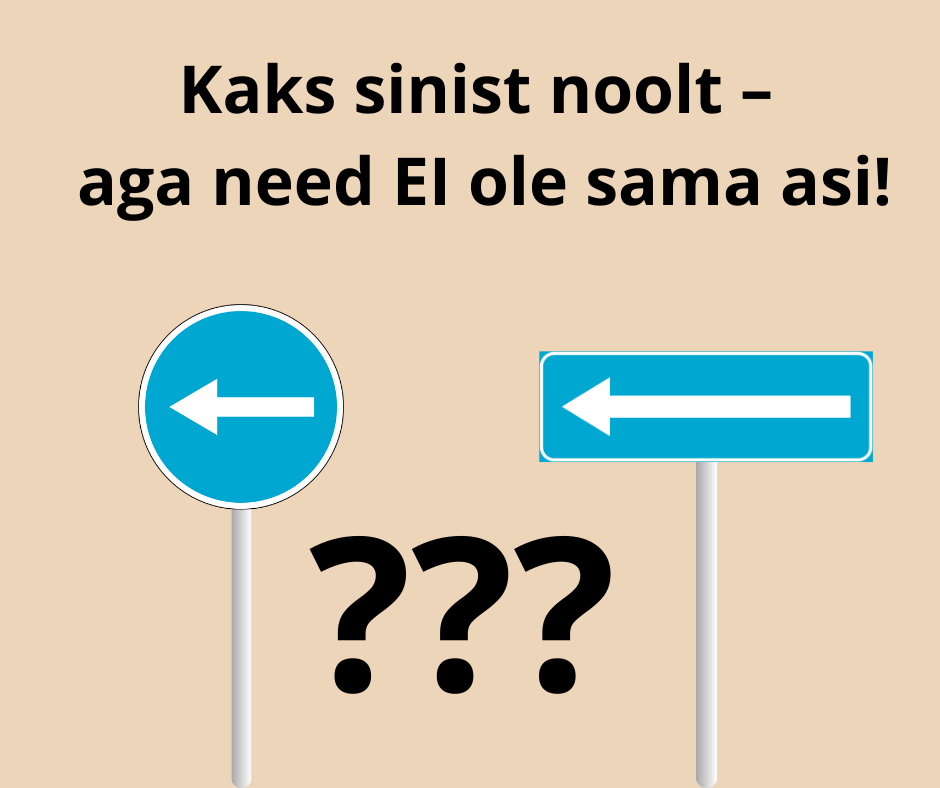
The rule: shape → meaning
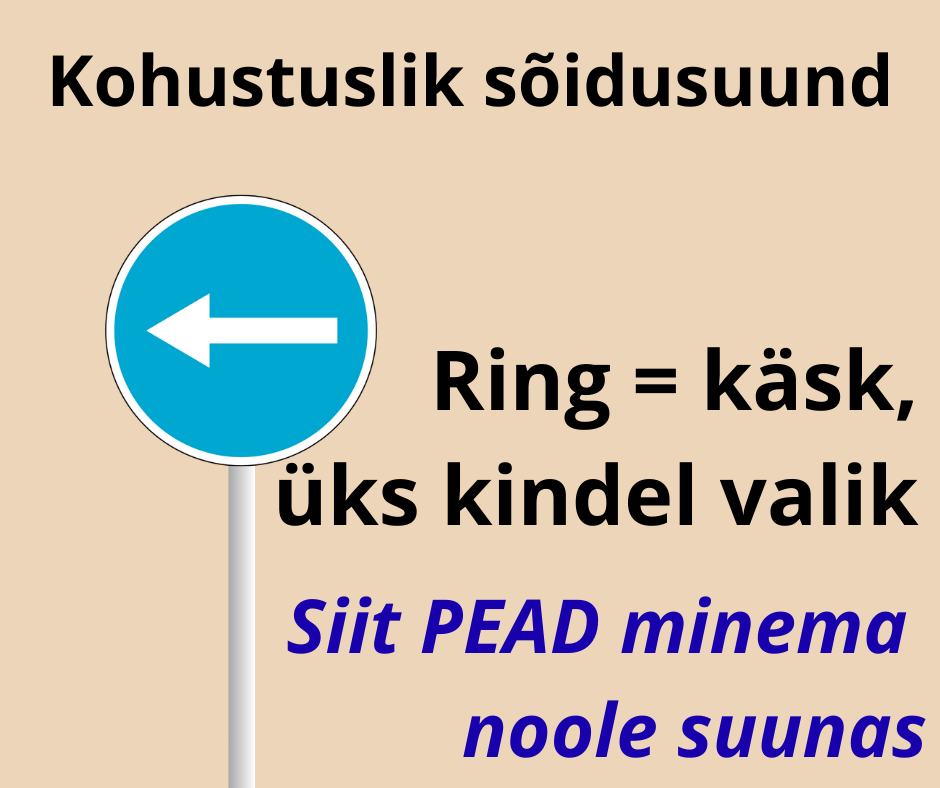
CIRCLE = direction, an order
At the junction you MUST travel in the direction of the arrow.
- Arrow to the right → right turn only
- Arrow to the left → left turn only
- Arrow straight ahead → do not turn, drive straight on
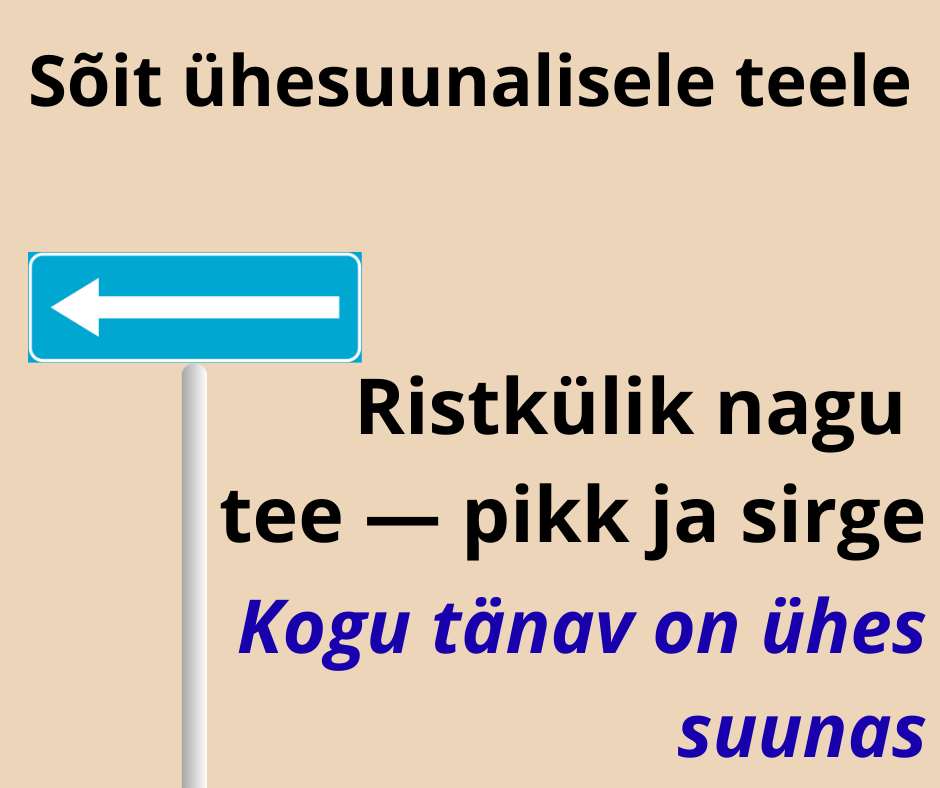
RECTANGLE = information about the street
It describes the street – traffic is permitted only in the direction of the arrow (a one-way street). Nobody drives the other way along it.
How to tell them apart in a second
- Look at the shape first – a circle (an order) or a rectangle (information).
Three common mistakes and what to do about them
- “A circle always means a turn.” Not necessarily. If the arrow points straight ahead, the order is not to turn but to carry straight on.
- “A rectangle obliges you to turn.” No. It tells you that this street runs in one direction.
- “I did not notice the sign at the start of the street or at the junction.” Look at the signs on the side street – if you see a rectangular plate, it is probably a one-way street.
Quick answers
Does a circle with a straight-ahead arrow mean I have to speed up?
No. It means the permitted direction is straight ahead only. Turning off is not allowed.
Where should I position the car on a one-way street when turning left?
At the left-hand edge.
Practise these signs in real situations
We make the signs make sense, rather than something to memorise. Category B courses in Tallinn – the trial lesson is free.
Register for the course
Book a trial lesson Ask on Messenger