
How to Get a Driving Licence: A Guide for Beginners
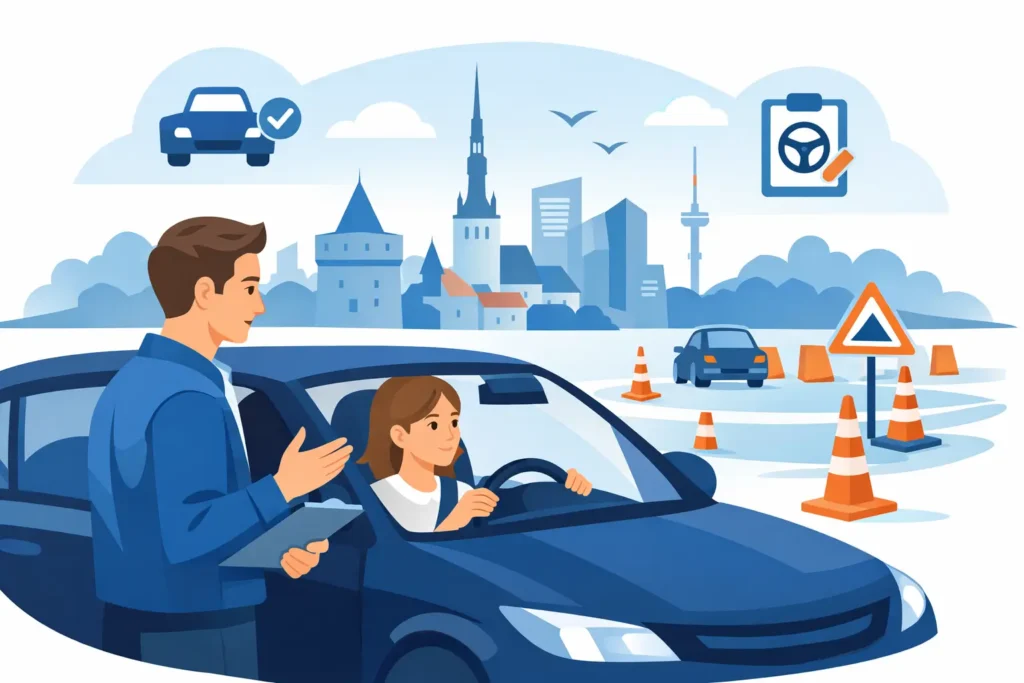
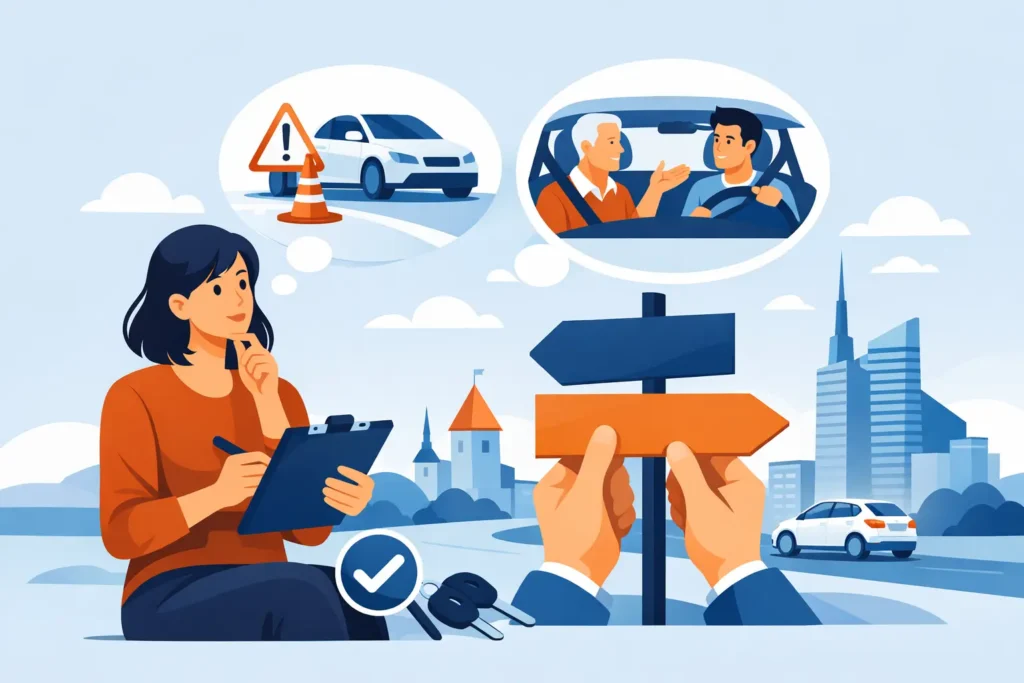
The first driving lesson can feel like a big step, especially if traffic, the clutch or the exam already create tension in advance. A good guide to getting a driving licence does not start on exam day, though, but with a clear plan: you choose a way of learning that suits you, study the rules with understanding, and practise behind the wheel until your decisions become calm and deliberate.
A category B licence is not only a document that gives you freedom of movement. It means responsibility towards other road users, your passengers and yourself. That is why it is worth treating the licence as a skill to be acquired, rather than a checkpoint to be cleared as quickly as possible.
The route to a licence, step by step
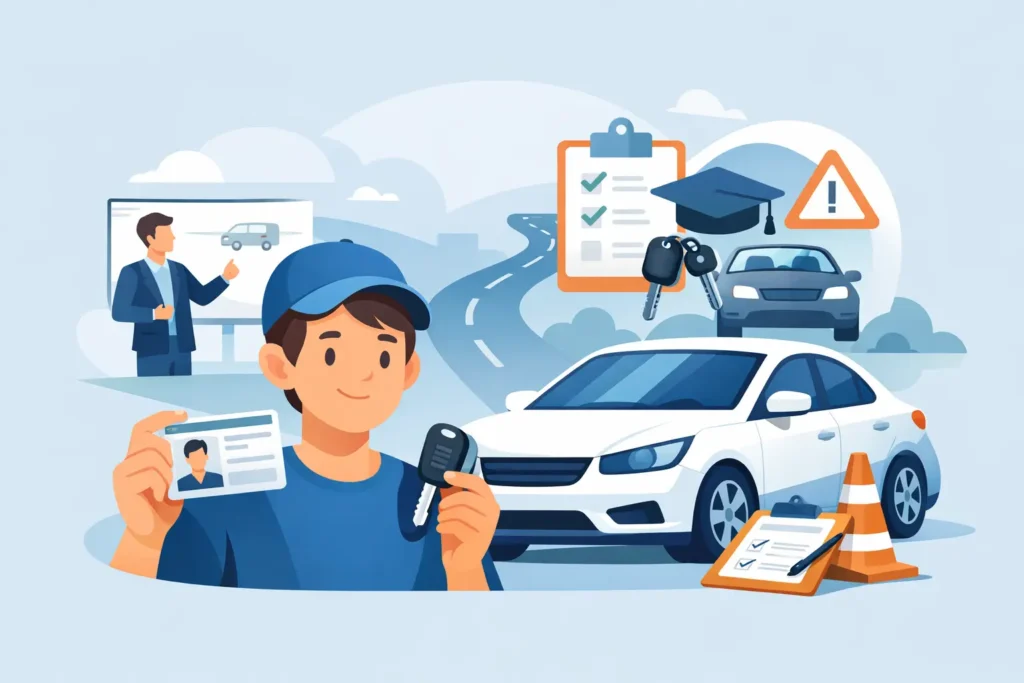
Broadly, the path consists of driving school training, the school’s internal assessments, and the state theory and driving exams. The exact requirements, medical certificates and age conditions can change, so check the current terms before you start. A category B licence can usually be obtained once you are of age, but driving training can begin earlier.
The biggest difference between learners does not come from whether someone has sat behind the wheel before. It comes from whether the training is regular and whether feedback is used to set the focus of the next lesson. If you take long breaks, part of the skill has to be recovered each time. If you drive consistently, you start to see the traffic picture as a whole rather than as a sequence of individual signs and manoeuvres.
Choose a driving school whose arrangements fit your life
When choosing a school, look at more than the price of the course. Ask whether the theory can be completed online, whether you can choose between a manual and an automatic, and whether lessons are offered in the evenings and at weekends. For someone in work or study, it is the flexible schedule that most often decides whether the training keeps pace or drags on for months.
The instructor matters just as much. A good teacher does not only say that something went wrong, but explains in which situation the mistake arose, how to notice it earlier, and what decision to make next time. That is especially valuable if you are anxious, have a fear of driving, or a previous exam did not go well. Calm guidance does not mean lowering the standards. It means the demands are clear, well-reasoned and built up in manageable steps.
A free trial lesson helps you judge both the instructor’s way of communicating and whether you feel safe in the car. The point of a first lesson is not to show perfect driving. Its point is to get an honest picture of your starting level and to set out the next steps.
Study the theory through situations, not answers
Theory questions have a correct answer, but in real traffic nobody reads out the options beside you. So in e-learning it is worth tying every topic to a specific situation: who has to give way at this junction, where a pedestrian might come from, what changes in the dark, and when reducing speed alone is not enough.
E-learning suits someone who wants to study at their own pace. It does need a routine, though. It is far more effective to study for shorter periods several times a week than to try to work through all the material in one evening. If a topic keeps coming back with wrong answers, do not simply memorise the answer. Read the explanation and think through which traffic situation lies behind the rule.
Priority, choice of speed, stopping distance, overtaking, visibility and allowing for cyclists and pedestrians deserve particular attention. These are not only exam topics. They are the areas where a driver is expected to anticipate well every single day.
Real driving skill is built in the lessons
In the first lessons you learn to control the car: the correct seating position, using the mirrors, steering, braking, changing gear or the logic of an automatic. Then come reading traffic, junctions, roundabouts, lane changes, parking and roads of different speeds. Skills do not always arrive in the order the textbook sets out. Parking comes quickly to one learner; another is ready for the pace of city traffic sooner. Good training adapts to that.
A manual gives you more flexibility, because such a licence lets you drive both manual and automatic cars. An automatic can be a sensible choice for someone who wants to focus earlier on watching the traffic, or whose everyday car is an automatic. The choice does not make you a better or worse driver. What matters is that the form of training supports your real needs and gives you confidence behind the wheel.
Do not be afraid of mistakes in a lesson. The more dangerous mistake is the one that goes unnoticed and unexamined. Braking too late, for example, may stem from your gaze being on the bonnet rather than further down the road. Uncertainty in a lane change may come from using the mirrors, but not in the right order and without enough time in hand. Once you know the cause, you can practise it.
How to prepare for the exams
Once the theory and driving training at the school are complete and the internal assessments are done, the time for the state exams arrives. The exam does not measure whether you are flawless in every situation. It assesses whether you can cope in traffic safely, independently and within the rules.
When preparing for the theory exam, do practice tests under conditions close to the real thing. Put your phone aside, answer the questions in sequence and keep an eye on the time. If the result is not solid, do not rely on luck. Go through the wrong answers by topic and repeat them until you can explain the rule in your own words.
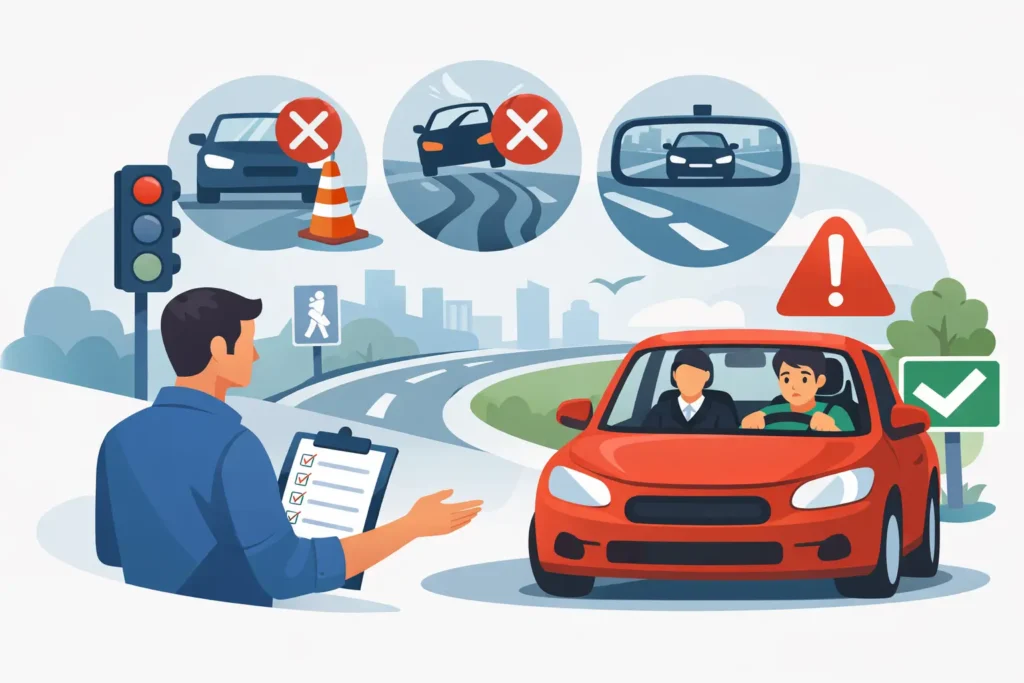
The driving exam assesses, among other things, observation, choice of speed, lane positioning, consideration for other road users and the independence of your decisions. On exam day you do not have to drive unusually slowly or check every movement twice. Overly cautious driving can equally obstruct traffic and make your intentions unclear. A safe driver is decisive, but never rushed.
A common worry is nerves. They are not removed by being told to calm down. They are reduced by experience. Before the exam, take a lesson in an area with varied traffic, practise the more demanding junctions, and ask your instructor to give as few hints as possible. That way you find out which decisions are already automatic and where you still need conscious attention.
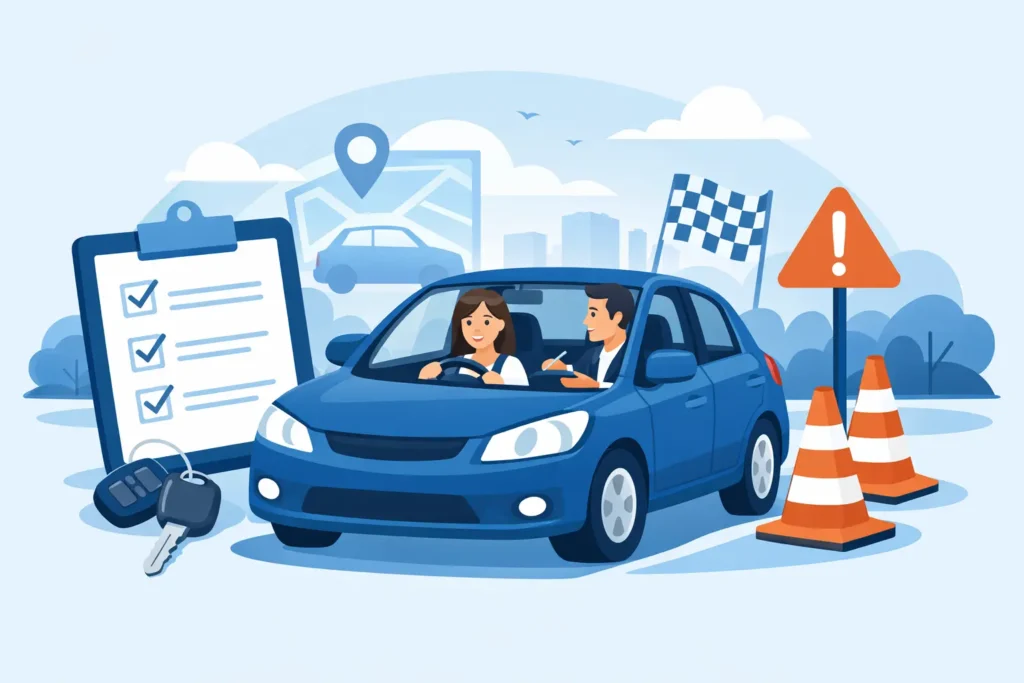
Kindel Rool puts the emphasis on exactly that independence: our category B learners in Tallinn are 1.43 times more likely to pass the driving exam on the first attempt than the Tallinn average. The result does not come from exam tricks, but from consistent practice, clear feedback and the ability to understand your own mistakes before they become habits.
If the exam does not go well the first time
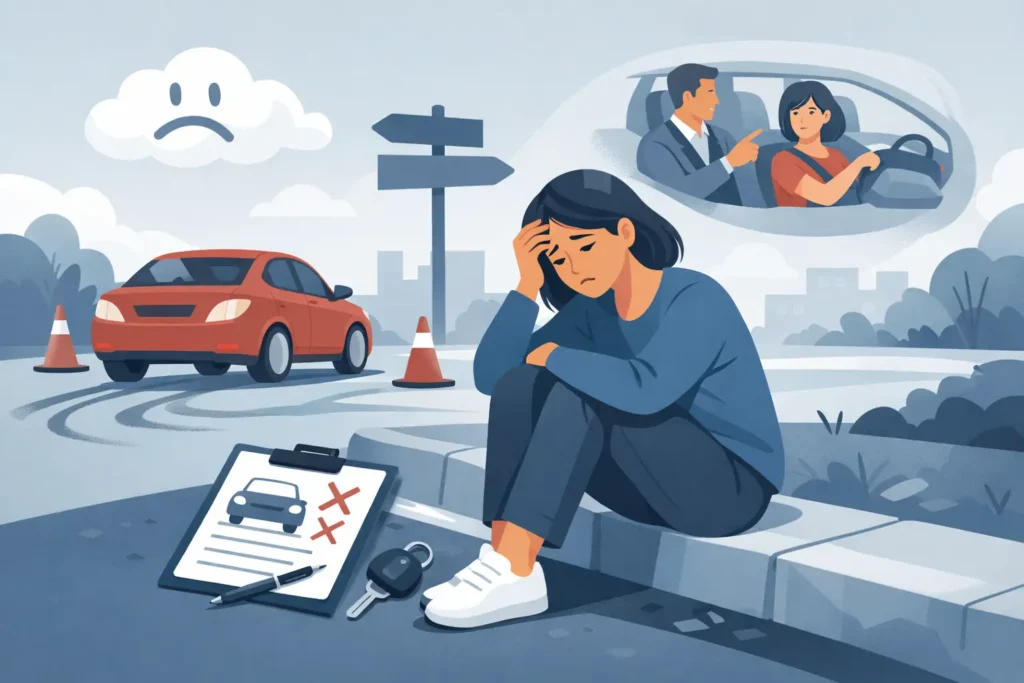
A failed exam does not mean you are unsuited to driving. Often it means one particular skill was not yet stable enough, or that tension affected the result. The worst choice is to take a long break and hope it will go better by itself next time.
Go through the exam feedback as specifically as you can. Was the problem observation, giving way, choice of speed, parking, or a lack of decisiveness? Then plan the extra drives around that weakness. One targeted lesson can achieve more than several drives taken at random.
Further training also suits those for whom a licence has long been the goal, but whose driving school was left unfinished or whose fear of driving has grown. Continuing is not starting from zero. It is putting existing knowledge in order and restoring confidence.
Plan your time and documents early
Getting a licence goes most smoothly when you set a realistic rhythm early on. Account for studying the theory, the driving lessons, the required courses, health requirements and exam dates. If you need the licence by a particular deadline – because of a new job, studies or family needs – build some slack into the plan. Exam slots and the need for extra practice do not always fit the first schedule.
Treat every lesson as a chance to learn something measurable. Before the lesson, think about what you want to improve; afterwards, note briefly what went better and what to repeat next time. That habit makes your progress visible even when a harder manoeuvre does not come off straight away.
Getting a licence is ultimately a route to greater independence, but its value does not end with the exam result. If you learn to anticipate traffic, decide calmly and correct your own mistakes, you will drive well even when there is no examiner beside you.